Odesa, Tehran, and Why a Free Ukraine and Free Iran Are the Same Fight
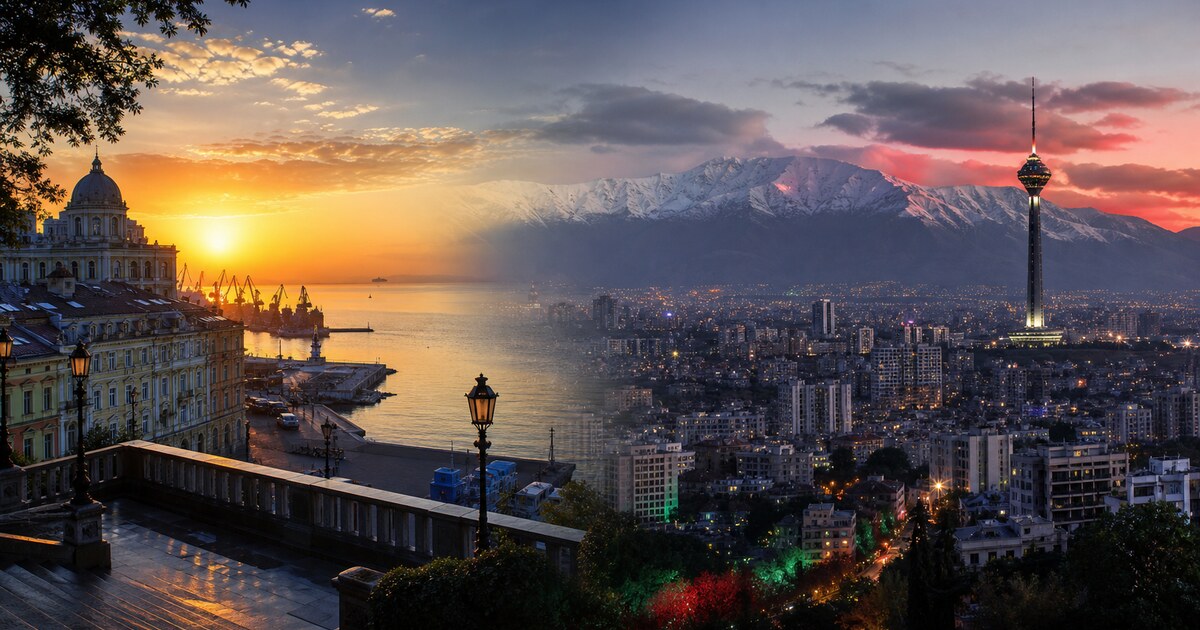
In 2019, I traveled to Odesa with my Ukrainian engineering team, my wife, and my one-year-old daughter.
It was supposed to be simple: a few days of team bonding in a beautiful city by the Black Sea. We walked, ate, talked, laughed, and built the kind of trust that remote teams only fully develop when people finally sit across from each other in the same room.
Years later, that world changed completely.
People I cared about were moving between bunkers. We sent generators. I told my team not to work because even opening a laptop in the wrong place could create risk. Ukraine was not an abstract headline to me. It was people I knew, families I knew, and a city I had walked through with my own family before war reached it.
That experience changed how I saw Ukraine. And as an Iranian who left a country occupied by the Islamic Republic, it made something clear: Ukraine and Iran's destinies are connected.
Why Reza Pahlavi Speaking in Odesa Matters
That is why Oleksiy Goncharenko's post from Odesa matters.
Reza Pahlavi speaking in Odesa is not just symbolism. It is the right message in the right city. Odesa knows what it means to face Moscow's imperial project. Iranians know what it means to live under Tehran's occupation from within. Those are not separate stories.
Ukrainian coverage of the Black Sea Security Forum reported Pahlavi's arrival in Odesa and the forum's focus on the security challenge created by the Russia-Iran axis. Another report described Pahlavi as calling Russia and Iran "co-architects of chaos", pointing directly to the Iranian drones Russia uses against Ukrainian cities.
That is the bridge: the drones over Ukraine and the repression inside Iran are not disconnected. They come from the same authoritarian machinery.
Moscow and Tehran Are the Same Problem
For too long, the West has treated these regimes as separate files: Russia policy here, Iran policy there, Ukraine over there, human rights somewhere else. That misses the structure of the threat.
Moscow and Tehran learn from each other. They arm each other. They launder each other's legitimacy. They test the free world in different theaters and count on democratic societies to treat every crisis as isolated.
Ukraine is fighting one face of that network. Iranians are fighting another.
This is why I wrote that US Iran policy keeps failing when it condemns the regime but refuses to pick a side. The Islamic Republic is not only Iran's problem. It is a regional security problem, a drone warfare problem, a hostage-taking problem, an internet shutdown problem, and now a direct partner in Russia's war against Ukraine.
What Ukraine Made Clear
When Russia invaded Ukraine, the free world could see the moral line clearly. A sovereign country was attacked. Civilians were bombed. Cities were targeted. People had to decide whether they stood with the occupier or the occupied.
Iran deserves the same clarity.
The Islamic Republic is not the legitimate expression of the Iranian people. It is an occupying system that has spent 47 years crushing the country from inside. It shuts down the internet when people rise up. It imprisons women for refusing humiliation. It exports drones, militias, and terror because repression at home and aggression abroad are part of the same survival strategy.
I have written before about Iran's internet blackout and the way the regime treats connection itself as a threat. Ukraine fights to keep its people connected under bombs. The Islamic Republic cuts its own people off in order to keep control. That contrast tells you everything.
A Free Ukraine Weakens the Axis. A Free Iran Breaks It.
A free Ukraine weakens Moscow's imperial project.
A free Iran breaks one of the core pillars supporting that project.
That is why Reza Pahlavi in Odesa matters. It connects the battlefield in Ukraine to the streets of Tehran, Shiraz, Isfahan, Mashhad, and every Iranian city where people have risked their lives to say: this regime does not represent us.
It also connects to the practical work of what comes next. A free Iran is not just a slogan. It requires legitimacy, planning, infrastructure, and a transition that Iranians can trust. That is why I paid attention when Pahlavi discussed Iran's democratic transition and post-regime future, and why I have written about the opportunities and responsibilities that come after the regime.
The Same Fight
Odesa made this personal for me before it became geopolitical.
I was there with my family and my team before the war. Then I watched people I cared about live through the consequences of Moscow's war. And as an Iranian, I could not miss the connection to Tehran: the same contempt for human life, the same obsession with control, the same belief that free people can be terrorized into silence.
They cannot.
A free Ukraine and a free Iran are not separate causes. They are the same fight.
Continue Reading